Atlantis

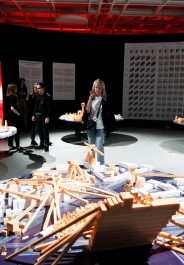
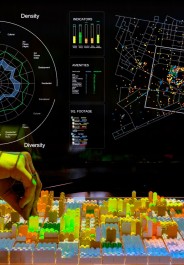
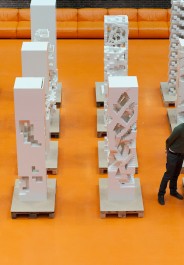
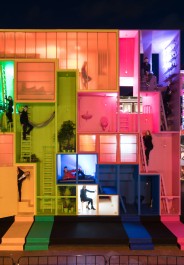
 As part of the expansion of the Dutch city of Almere, the planners of MVRDV, West 8 and McDonough+Partners teamed up to design Almere IJland, a new atlantis that is created between urban and ecological systems. 


In principle, in the midst of the internationally protected nature of Almere IJland, the aim is to create healthy ecological systems for the urban fibre. IJland will have a positive effect on the natural environment. The cradle-to-cradle philosophy is interwoven into the design. Water, for example, that leaves Almere IJland will be cleaner than when it enters thanks to natural purification processes. IJland will produce more clean renewable energy than it requires; therefore being an energy producer for the region. IJland will provide optimal public transport systems to deter the usage of motorcars. Some parts of the development will even be entirely auto-free. These measures will also induce a hybrid urban landscape of both isolated island – for instance as is experienced on the Wadden islands – and connected regional hub. The wealth of nutrients that is continuously wasted in by our urban areas will be employed as resources on IJland by reintroducing these chemical and biological agents as drivers for all manners systems. Almere IJland will offer an aesthetic, multifaceted, safe and healthy living environment – with clean water, air, soil and energy.


The model of this ecological atlantis can be developed further and applied elsewhere. Can it lead to a new urban strategy?In principle, in the midst of the internationally protected nature of Almere IJland, the aim is to create healthy ecological systems for the urban fibre. IJland will have a positive effect on the natural environment. The cradle-to-cradle philosophy is interwoven into the design. Water, for example, that leaves Almere IJland will be cleaner than when it enters thanks to natural purification processes. IJland will produce more clean renewable energy than it requires; therefore being an energy producer for the region. IJland will provide optimal public transport systems to deter the usage of motorcars. Some parts of the development will even be entirely auto-free. These measures will also induce a hybrid urban landscape of both isolated island – for instance as is experienced on the Wadden islands – and connected regional hub. The wealth of nutrients that is continuously wasted in by our urban areas will be employed as resources on IJland by reintroducing these chemical and biological agents as drivers for all manners systems. Almere IJland will offer an aesthetic, multifaceted, safe and healthy living environment – with clean water, air, soil and energy.


The model of this ecological atlantis can be developed further and applied elsewhere. Can it lead to a new urban strategy?