Varosha!

(Re) inventing the Cypriot City

Varosha, a forbidden zone within the city of Famagusta (Cyprus), Varosha was once full of thriving hotels, restaurants and tourists.

Now it is surrounded by barbed wire and controlled by Turkish military. This part of Famagusta has been completely sealed off from the rest of the city since 1974. It has turned into a ghost town, a no-mans city. It has been frozen in time with department stores still full of clothes, now many years out of fashion, and hotels empty but fully equipped. 


What to do with such an abandoned place? A place where all the built environments are rotten. Can a new city rise up from the ruins? How? Based on what criteria? Should we or should we not inhabit this place? Who will re-inhabit? Can we give it back to its rightful owners? What strategies can we think of for re-inhabiting? What will be its program? What will it look like? What will be the architectural agenda? And its political?


What will the future purpose of Varosha be?

Should we start from scratch? By disregarding the existing and deconstruct all infrastructure and buildings. Or should we continue from the current? By restoring the existing and renovate all infrastructure and buildings. Will it then become a museum? A monument? An open city? Or a ‘better’ walled city? A leisure zone or theme park?


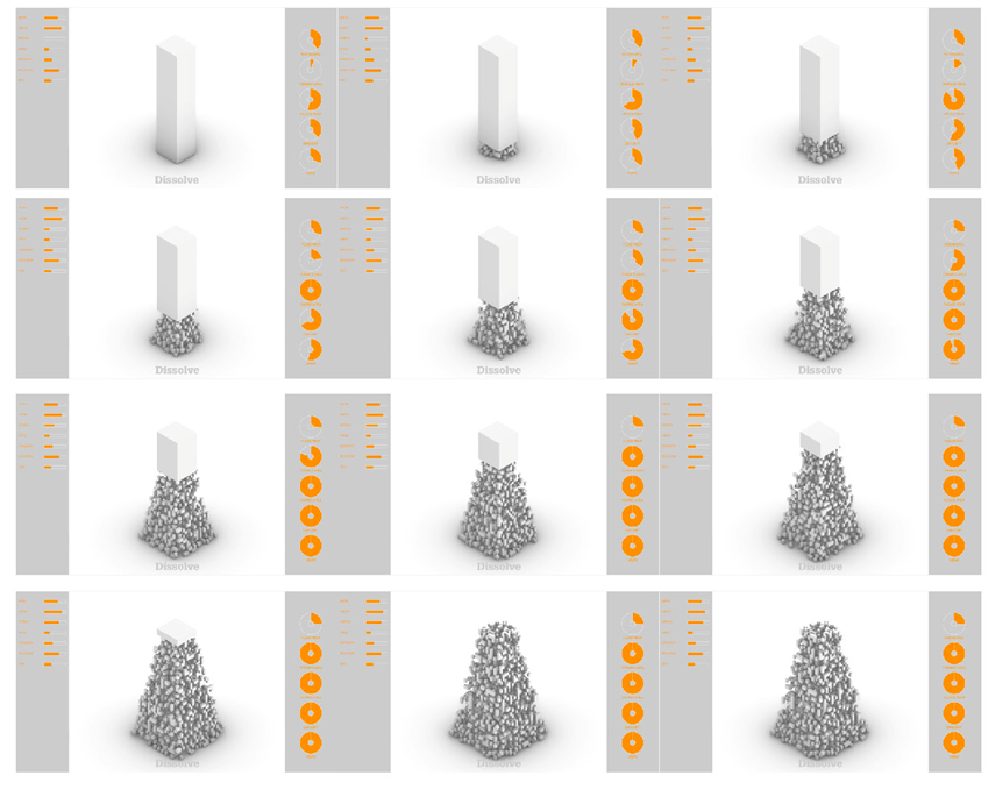
This studio aims to explore and investigate into the future of the ‘Cypriot City’ and is based on the hypothetical event of the return of the abandoned and fenced city of Famagusta to its former inhabitants.The main objective of this studio is to generate a variety of future developments by use of parametric urban design tools in order to prepare the city for rehabilitation. Bearing in mind the pre-1974 flourishing of the city as a tourist attraction and regional centre for light industry, designs should not only be restricted to a present day inhabitation of the city but also to future growth forecasts.


Which parametric system will then better address the issues of property, circulation or growth along with non-quantifiable elements such as collective memory and social activities? And what will any growth estimates be based on, when any growth has been halted since 1974? These issues are all diverse exceptions from any usual urban design project and could potentially form a challenging environment for architectural students to generate and practice parametric agendas and designs respectively.